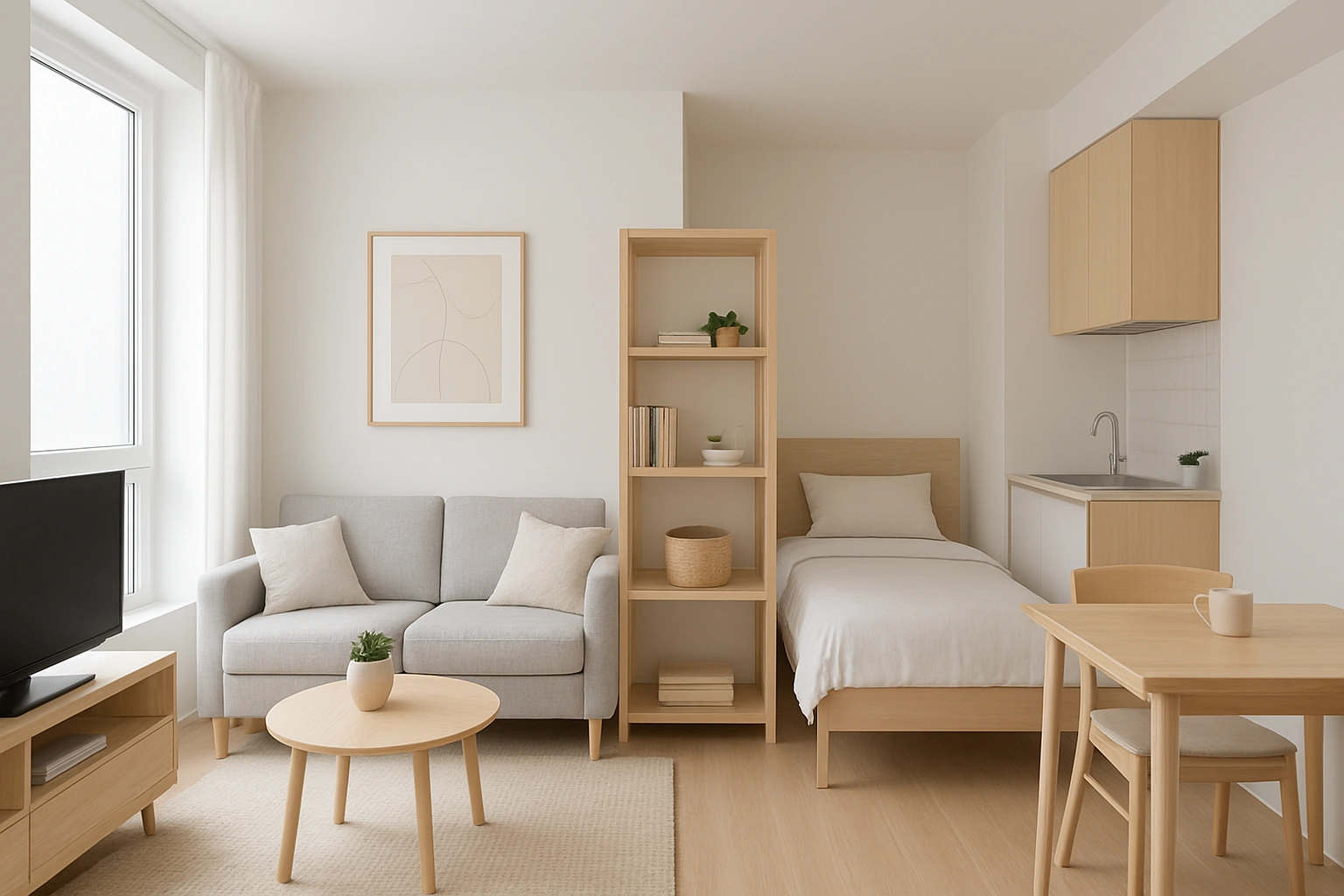
The studio apartment is the quintessential urban dwelling, a symbol of independence and city life, and Compact Studio Living shows how to make it work beautifully. The reality of living, sleeping, and eating in one single room can be challenging, but Compact Studio Living strategies help you create a space that feels like a true home. This guide offers actionable Compact Studio Living tips that help you zone, organize, and design your space efficiently. By following Compact Studio Living principles, you can make your studio functional, stylish, and comfortable, feeling much larger than its square footage suggests.
What is Compact Studio Living?
Compact Studio Living is the art and science of creating a fully functional and comfortable home within a single, open-plan room. Compact Studio Living requires intentionality and creativity to make every piece of furniture and every inch of space serve multiple purposes. Unlike traditional apartments, Compact Studio Living focuses on designing a cohesive environment where living, working, and relaxing all happen seamlessly. By applying Compact Studio Living principles, you can transform a small studio into a home that feels spacious, harmonious, and completely functional.
As urban density increases and housing trends shift towards smaller, more efficient units, Compact Studio Living is becoming an essential life skill. Compact Studio Living encourages a minimalist mindset while using clever design to make the most of every inch. By applying Compact Studio Living strategies, you can create a home that is both beautiful and highly functional. With Compact Studio Living principles, even the smallest studio can feel open, organized, and perfectly tailored to your lifestyle.
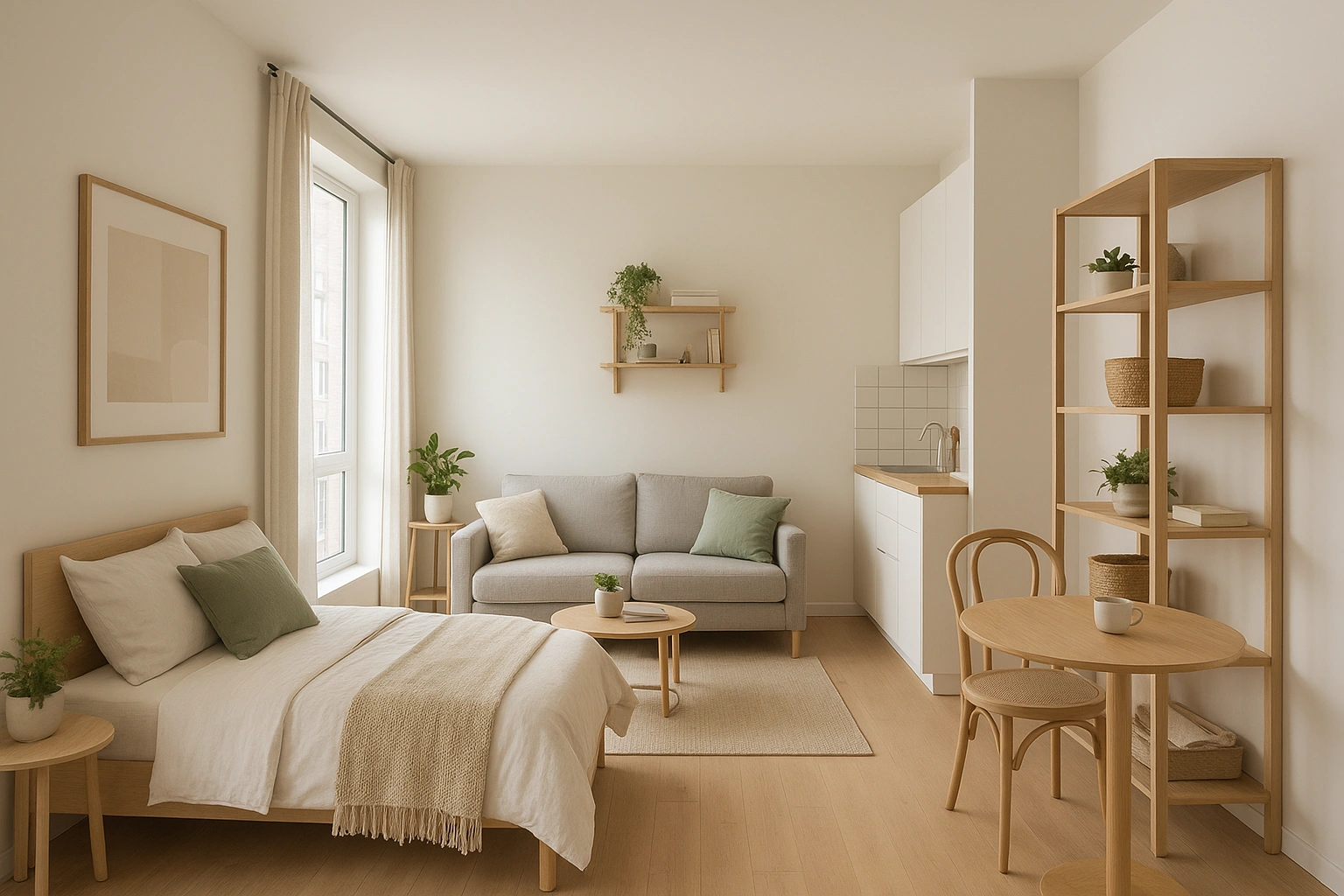
The Transformative Power of a Well-Designed Studio
When you master your studio space, you do more than just make it look good; you fundamentally improve your daily life.
1. It Creates Essential Psychological Boundaries
Living and sleeping in the same room can be mentally draining, especially if you also work from home. Creating distinct zones for different activities—sleeping, working, relaxing—provides crucial psychological separation. This helps you to “switch off” from work mode and allows your bedroom area to be a true sanctuary for rest.
2. It Maximizes Your Investment
You pay for every square foot of your apartment, so why not use it all? Clever zoning and multi-functional furniture allow you to unlock the full potential of your space. A well-designed studio can feel just as functional as a one-bedroom apartment that costs significantly more.
3. It Fosters a More Intentional and Organized Life
You simply cannot be a hoarder in a studio apartment. The space limitations force you to be mindful about what you own and to keep things organized. This often leads to a simpler, less cluttered, and more intentional lifestyle. For more insights on intentional living, explore the resources at Bitcoin News.
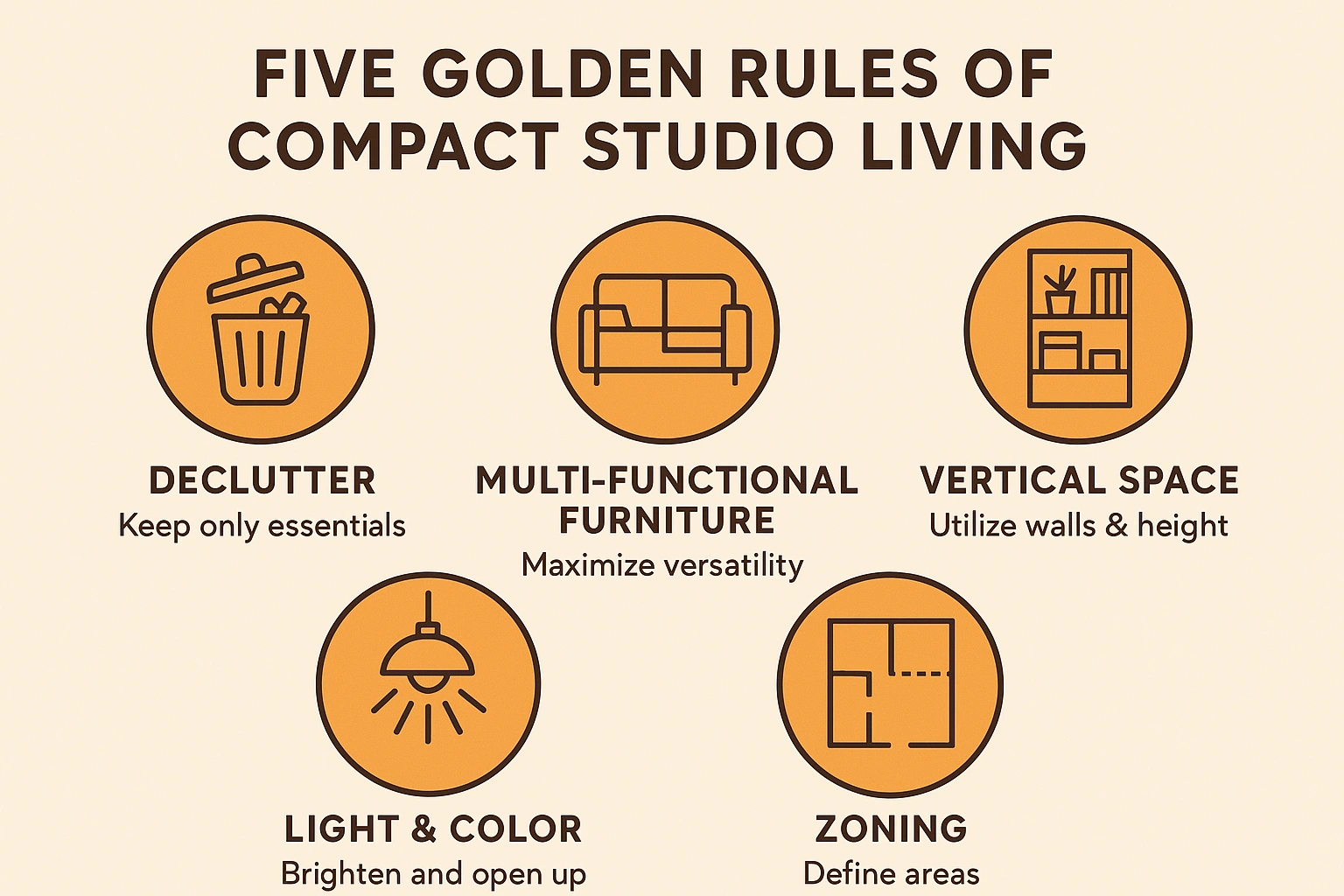
The 5 Golden Rules of Compact Studio Living
Follow these five core principles to create a studio that feels like a palace.
1. Zone, Zone, Zone
This is the most important rule. You must create distinct areas for sleeping, living, and dining/working. Use furniture as dividers. A tall, open-backed bookshelf is perfect for separating a sleeping area. An area rug can define the boundaries of your living room. This creates the illusion of separate rooms.
2. Embrace Multi-Functionality
Your furniture needs to work overtime. A daybed can be a sofa and a bed. A lift-top coffee table can be your dining table and your desk. A storage ottoman can be a footrest, a seat, and a place to hide your clutter.
3. Think Vertically
Utilize the space between the top of your furniture and the ceiling. Install tall bookshelves and use wall-mounted shelves for books, plants, and decor. This draws the eye upward and makes the room feel taller.
4. Let There Be Light
Maximize both natural and artificial light. Use sheer curtains to let in daylight while maintaining privacy. Use multiple light sources—an overhead light, a floor lamp, a table lamp—to create a bright and inviting atmosphere. A large mirror placed opposite a window is a classic trick to make a space feel larger.
5. Hide Your Clutter
In a studio, there’s nowhere for clutter to hide, so you have to create places for it. Use attractive woven baskets, storage ottomans, and bed frames with built-in drawers. The more you can keep out of sight, the larger and calmer your space will feel.
My Studio Makeover: From Chaos to Calm
My 400 sq. ft. studio was a classic case of bad layout. My bed was the first thing you saw when you walked in, and my desk was crammed into a corner. I decided to apply the principles of zoning. I bought a tall IKEA KALLAX bookshelf and used it to create a “bedroom” nook. This simple change was transformative.
| The Results | The Challenges |
|---|---|
| ✅ It created a clear and welcoming entryway and living area. | ❌ Assembling the large bookshelf by myself was difficult. |
| ✅ My sleeping area finally felt private and separate from the rest of my life. | ❌ I had to be very precise with my measurements to ensure everything fit. |
| ✅ I felt a huge reduction in stress and a greater sense of peace in my home. | ❌ It required me to declutter and get rid of a few pieces of furniture. |
Top 5 Game-Changing Items for Studio Living
If you’re going to invest in a few key pieces, these offer the biggest impact.
| Item | Primary Function | Pros | Cons | Best For |
|---|---|---|---|---|
| Open-Backed Bookshelf | Storage & Room Divider | Creates zones without blocking light | Can look cluttered if not styled well | Separating a sleeping area from a living area. |
| Murphy Bed | Bed | Frees up an entire room’s worth of floor space during the day | Expensive, requires installation | The ultimate space-saver for a truly multi-functional room. |
| Lift-Top Coffee Table | Table & Desk | Creates a functional dining or workspace | Can be heavy | Those who work from home and don’t have space for a separate desk. |
| Nesting Tables | Side Tables | Flexible surface area that can be tucked away | No storage | Replacing a bulky coffee table. |
| Large Area Rug | Zoning | Clearly defines a living space, adds warmth and texture | Needs to be the right size for the space | Visually separating the “living room” from the “bedroom.” |
Common Studio Apartment Mistakes to Avoid
- The “Wallflower” Layout: Don’t just push all your furniture against the walls. Pulling your sofa away from the wall and placing a rug in the center can create a cozier, more defined living area.
- Too Many Small Pieces: A collection of small furniture and decor items can make a space feel cluttered. Often, a few larger, well-proportioned pieces work better.
- Ignoring the Entryway: Your entryway is the first impression. Create a designated “drop zone” with a small console table and some wall hooks to keep keys, mail, and coats from cluttering your living space.
- Forgetting About Your Bed: Your bed is a huge piece of furniture. Invest in a beautiful duvet and pillows. Making your bed every day is a simple act that will instantly make your entire studio feel tidier.
Expert Tips & Best Practices
We asked interior designer and small-space expert, Maria Jensen, for her top tip.
“My number one rule for studios is to choose a cohesive color palette and stick to it. A limited palette of three to four complementary colors will make the entire space feel unified and intentional, rather than a chaotic jumble of different zones. It’s the simplest way to create a sophisticated and serene environment.”
- Use Vertical Stripes: A single accent wall with vertical stripes can draw the eye upward and create an illusion of height.
- Choose “Ghost” Furniture: Pieces made from clear acrylic or lucite, like a coffee table or console table, have almost no visual weight and can make a space feel much more open.
Frequently Asked Questions (FAQ)
Q: What is the best way to divide a studio apartment without building walls?
A: The best way is to use furniture as room dividers. A tall, open-backed bookshelf (like an IKEA KALLAX) is a classic choice because it creates a visual separation while still allowing light to pass through. You can also use a stylish folding screen, a strategically placed sofa, or even a curtain hung from the ceiling.
Q: How can I create the illusion of more space in a tiny studio?
A: Use large mirrors to reflect light and create depth. Paint your walls a light, neutral color. Choose furniture with raised legs to show more floor space. And maximize natural light by using sheer curtains. These simple tricks can make your studio feel significantly larger.
Q: What kind of bed is best for a studio apartment?
A: A multi-functional bed is a game-changer. A Murphy bed that folds into the wall is the ultimate space-saver. Alternatively, a platform bed with built-in storage drawers underneath is a fantastic option. A stylish daybed that can double as a sofa is also a great choice for a living/sleeping area.
Q: How do I manage clutter in a one-room apartment?
A: The key is to have a designated ‘home’ for everything and to be ruthless about decluttering. Use hidden storage solutions like storage ottomans and under-bed containers. Adopt the ‘one-in, one-out’ rule: for every new item you bring in, something old must go out. Daily tidying is essential.
Q: Is it possible to host guests in a studio apartment?
A: Yes, with smart planning. A convertible sofa bed is the most common solution. You can also use an expandable dining table that can be small for everyday use but larger for dinner parties. Multi-functional furniture is the key to being a successful host in a small space.
Conclusion
Living in a studio apartment is a unique and rewarding experience, and Compact Studio Living encourages you to be more creative, organized, and intentional about the way you live. By embracing Compact Studio Living strategies, you can tackle the challenges of a one-room layout and make every inch work efficiently. With Compact Studio Living principles, your studio can become not just functional, but also stylish and inviting. Applying Compact Studio Living tips helps you transform your small space into a home you’ll be proud to call your own.