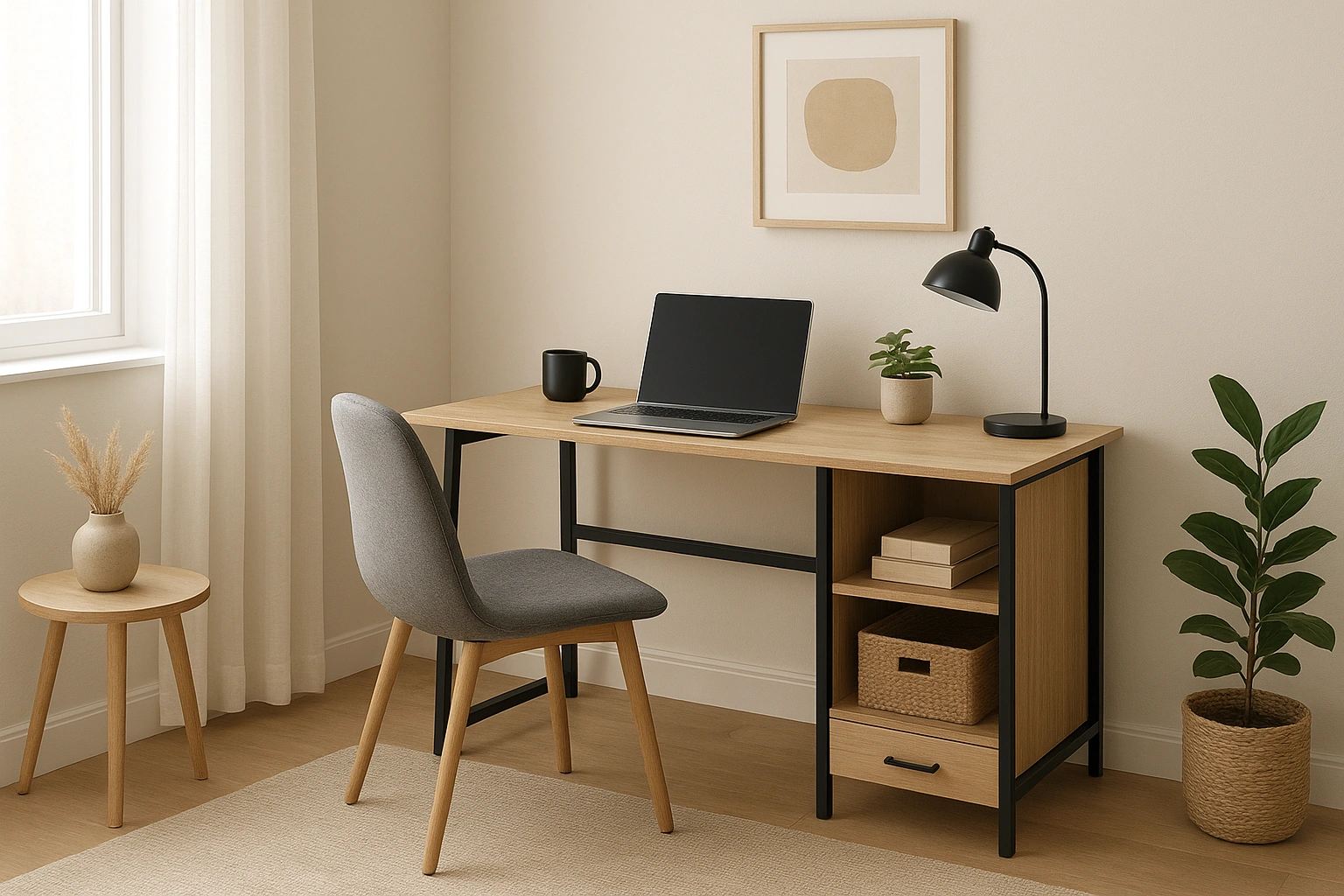
The remote work revolution has changed our lives, but it has also invaded our homes. Your dining table is now your conference room, your bedroom corner is your cubicle, and the line between work and life has become hopelessly blurred. For those of us in small houses or apartments, carving out a dedicated, functional workspace feels like an impossible dream.
But it doesn’t have to be. The solution is not to find more space, but to use your existing space smarter. The key lies in the perfect multifunctional desk small spaces were made for. These are not just desks; they are transforming workstations, masters of disguise that offer a full-sized office experience and then vanish when the workday is done. This guide will explore the most innovative designs of 2025, helping you create a productive home office that doesn’t take over your home.
What is a Multifunctional Desk?
A multifunctional desk is a piece of **compact home office furniture** designed to serve multiple purposes or to be easily hidden or minimized when not in use. It rejects the idea of a large, static desk that dominates a room. Instead, it uses clever design principles like folding mechanisms, vertical storage, and integrated components to provide a complete workstation within a minimal footprint. This can be a desk that folds out from a slim cabinet, a shelving unit with a built-in work surface, or a bed that hides a desk underneath.
The demand for these smart designs has exploded in the wake of the global shift to remote work. As highlighted by research from institutions like Statista, a significant portion of the workforce now operates from home, creating an urgent need for home office solutions that fit into real-world living spaces. These desks are the answer to that need.
Why a Smart Desk is a Game-Changer for Your Home and Productivity
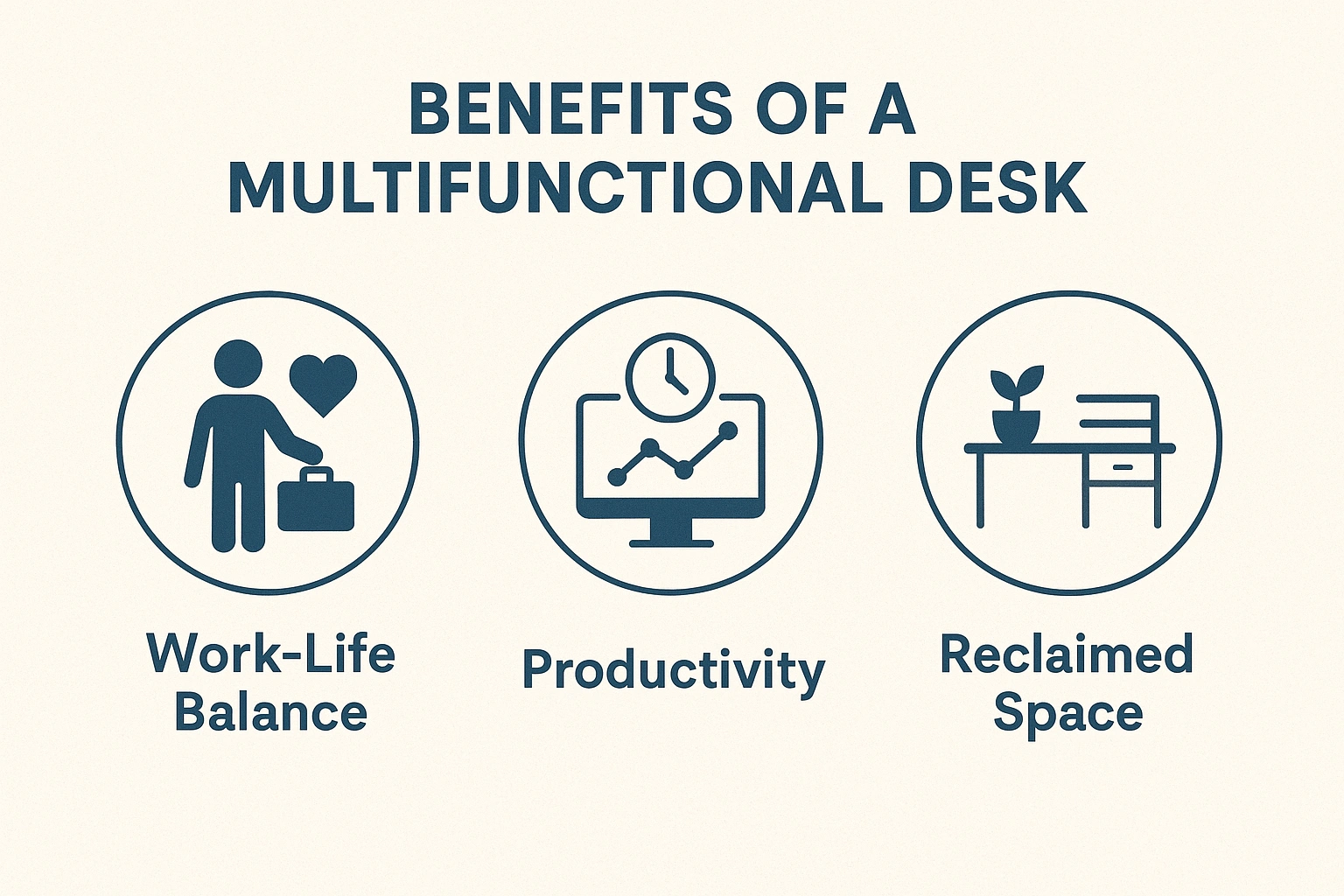
Investing in a multifunctional desk is one of the most powerful things you can do to improve your work-from-home life. The benefits are profound.
It Creates a Clear Boundary Between Work and Life
When your dining table is your desk, it’s hard to mentally “clock out.” A desk that can be folded away or closed up creates a powerful psychological boundary. At the end of the day, you physically put your work away, allowing your living space to become a place of rest and relaxation again. This separation is crucial for preventing burnout.
It Boosts Focus and Productivity
Having a dedicated, organized workspace, even a small one, signals to your brain that it’s time to focus. A multifunctional desk with integrated storage allows you to keep your work essentials organized and within reach, minimizing distractions and maximizing your efficiency. For more on boosting your productivity, explore our resources at bitcoinnews.biz.id.
It Reclaims Your Living Space
A traditional desk is a permanent fixture. A smart desk is a temporary one. By choosing a design that folds, slides, or hides away, you reclaim valuable floor space for other activities. Your living room can be a living room again, and your bedroom can be a sanctuary, free from the constant visual reminder of work.
How They Work: The Core Design Concepts
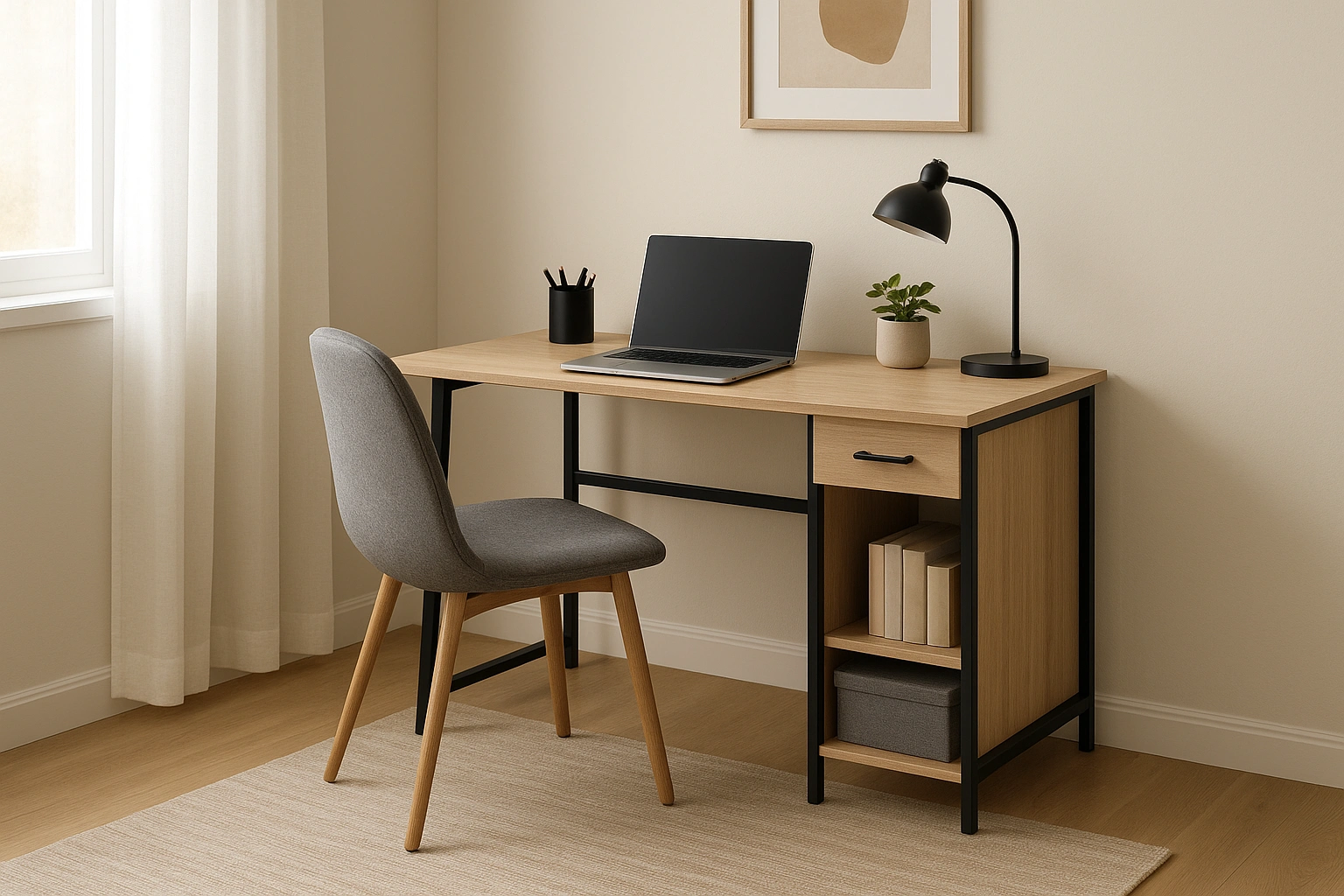
Multifunctional desks achieve their space-saving magic through a few key design strategies.
- Folding & Collapsing: This is the most common feature. It includes wall-mounted desks that fold down from a cabinet, and portable desks with legs that collapse for easy storage.
- Vertical Integration: These designs use vertical space to combine a desk and storage into one unit. Ladder desks, which lean against the wall, and corner desks with a hutch are prime examples.
- Concealment: This involves hiding the desk within another piece of furniture. Secretary desks, where the work surface folds out from a cabinet, and armoires with a built-in computer station are classic examples of this “hidden office” concept.
Real-Life Review: The “Stealth” Wall-Mounted Desk
I live in a studio apartment, and the idea of a permanent desk taking up floor space was a non-starter. I chose a wall-mounted fold-down desk, and it’s been the perfect solution. When closed, it’s a slim, floating cabinet that’s only about 6 inches deep, with a small shelf on top for a plant. When I’m ready to work, I unlatch the front panel, and it smoothly folds down to become a surprisingly spacious and sturdy desk. It has small cubbies inside for my pens and notebook. The best part is the end-of-day ritual: I close my laptop, fold up the desk, and my workspace completely disappears. It has been essential for maintaining my sanity while working from home.
| Pros | Cons |
|---|---|
| ✅ Occupies zero floor space, making the room feel huge | ❌ Requires secure installation into wall studs |
| ✅ Creates a powerful mental separation from work | ❌ Limited surface area and no legroom underneath |
| ✅ Looks incredibly sleek and minimalist when closed |
Comparison: Top Multifunctional Desk Styles
Let’s compare the most popular styles to help you find the perfect fit for your home office needs.
| Desk Style | Key Features | Pros | Cons | Best For |
|---|---|---|---|---|
| Wall-Mounted Fold-Down | Hinged to the wall, cabinet-like design. | Ultimate space-saver, looks clean and modern. | Requires installation, fixed location. | Creating a completely disappearing office. |
| Ladder Desk | Leans against the wall, combines shelves and a desk. | Uses vertical space, stylish, minimal footprint. | Limited desk depth, less stable than other types. | Light work, students, and displaying decor. |
| Secretary Desk | Work surface folds out from a cabinet with drawers/shelves. | Hides all clutter, excellent storage, classic look. | Can be bulky, traditional aesthetic. | Hiding a messy workspace in a living room. |
| Corner Desk with Hutch | Fits into a corner, uses vertical space for storage. | Maximizes awkward corner space, lots of storage. | Can feel visually heavy, fixed location. | Creating a dedicated, permanent office nook. |
Common Mistakes to Avoid
- Ignoring Ergonomics: A desk that is too high, too low, or too shallow can lead to serious discomfort. Check the desk height and ensure you have enough legroom and surface area for your monitor and keyboard.
- Underestimating Your Storage Needs: Be realistic about how much stuff you need for your job. If you have a lot of paperwork and supplies, a simple ladder desk might not be enough. Choose a design with adequate integrated storage.
- Forgetting About Cable Management: A tangle of wires can make even the sleekest desk look cluttered. Look for desks with built-in grommets or trays, or plan to invest in a separate cable management solution.
- Choosing the Wrong Chair: Your desk is only half the equation. An ergonomic chair is essential for comfort, but a bulky office chair can ruin the aesthetic of a small space. Look for slim, stylish ergonomic chairs that can tuck neatly under the desk.
Expert Tips & Best Practices
“The best home office, no matter the size, is one that supports your well-being. When choosing a multifunctional desk, think about light. Can you position it near a window? Natural light is a huge productivity booster. Also, ensure the lifted or unfolded surface is stable. A wobbly desk creates a subtle, constant sense of instability that can be surprisingly draining.”
– Dr. Anika Sharma, Ergonomics Consultant
- Go Vertical: Use the wall space above your desk for floating shelves or a pegboard to keep your desk surface clear.
- Invest in a Good Light: A slim, high-quality LED desk lamp is essential for reducing eye strain and will take up minimal space.
- Think About Placement: If possible, position your desk so you are facing a wall, not into the middle of the room. This creates a psychological sense of a separate “zone.”
- Use a Monitor Arm: A monitor arm that clamps onto the back of the desk frees up the entire surface area that would otherwise be taken up by the monitor’s stand.
Frequently Asked Questions (FAQ)
Q: Are wall-mounted desks sturdy enough to hold a computer?
A: Yes, when installed correctly into wall studs, a high-quality wall-mounted desk is very sturdy and can easily support the weight of a laptop, a monitor, and other office essentials. Always check the manufacturer’s specified weight capacity and ensure it is professionally or securely installed.
Q: What is the best type of multifunctional desk for someone who needs a lot of storage?
A: A secretary desk or a corner desk with an integrated hutch is the best option for storage. These designs incorporate multiple drawers, shelves, and cubbies, allowing you to keep your entire workspace organized and contained within a single piece of furniture.
Q: How do I manage cables with a compact desk?
A: Cable management is key for a tidy small office. Look for desks with built-in cable grommets or trays. You can also use adhesive cable clips, velcro ties, or a cable management box to keep wires organized and out of sight.
Conclusion: Your Perfect, Productive Nook Awaits
Creating a functional and inspiring home office in a small space is not only possible; it’s easier than ever before. By choosing the right multifunctional desk, small spaces can be transformed into havens of productivity. A multifunctional desk helps you separate work and rest, making your living area feel balanced. With a multifunctional desk, these clever designs allow you to have a dedicated workspace when you need it and a peaceful home when you don’t. Investing in a multifunctional desk also means investing in comfort, efficiency, and long-term well-being.
By investing in a piece of multifunctional desk that fits your needs and your style, you are also investing in your productivity, your well-being, and your ability to thrive while working from home. A multifunctional desk can give you more than just a surface to work on—it offers clever storage, adaptability, and even the flexibility to double as a dining or creative space. With the right multifunctional desk, you can finally close the laptop on your dining table for good and enjoy a workspace that feels intentional. Choosing a multifunctional desk is about creating the organized, inspiring environment you truly deserve.