What is Minimalist Interior Design?
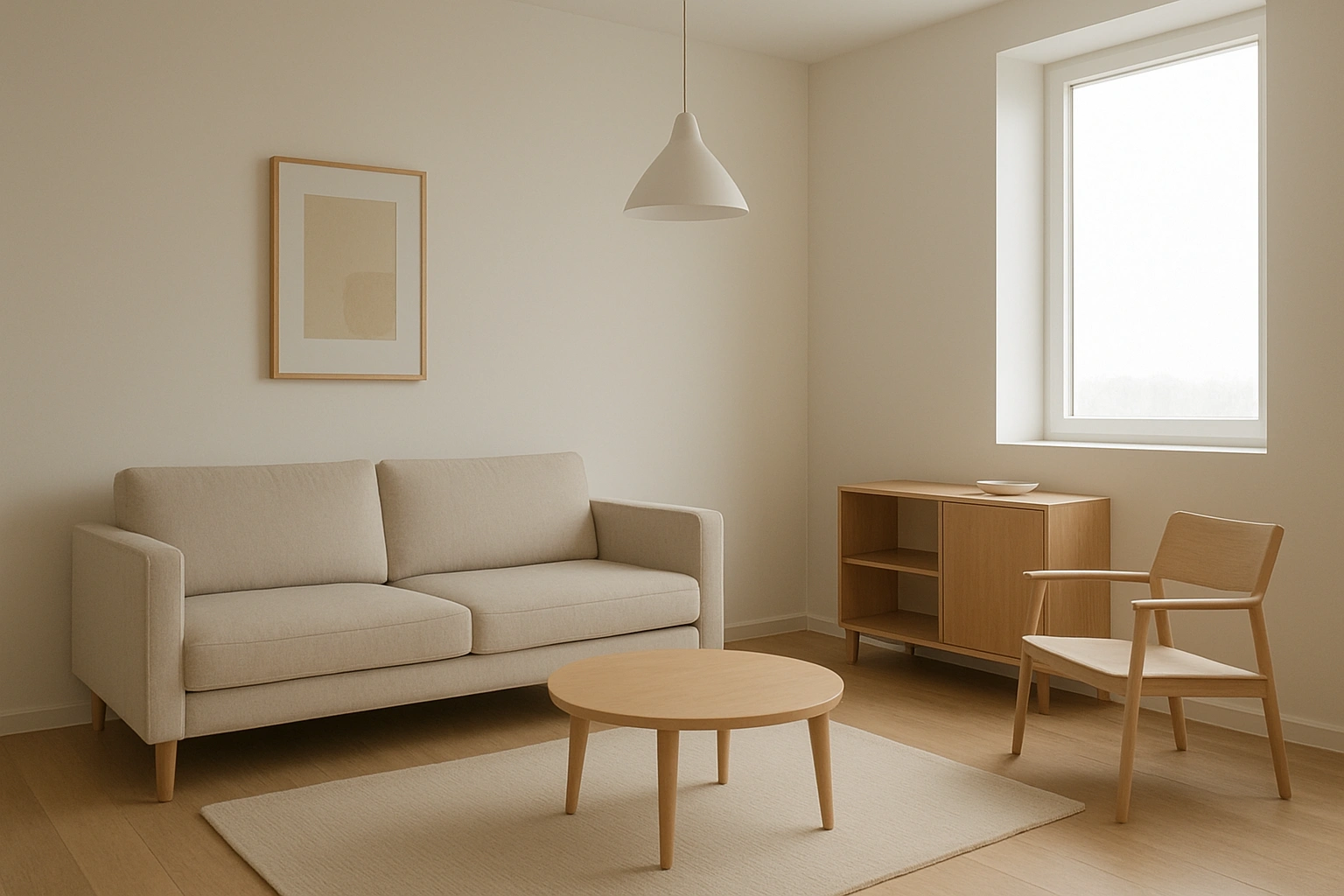
Minimalist design is an aesthetic and a philosophy rooted in the principle of “less is more.” A minimalist living room focuses on stripping away the non-essential so the essential elements shine. Applying minimalist living room ideas emphasizes clean lines, a muted color palette, simple forms, and plenty of natural light. Every piece in a minimalist living room is chosen with intention and purpose, creating a space that feels serene and thoughtfully curated.
In 2025, minimalism is more relevant than ever. As our lives become more digitally cluttered, there’s a growing desire for our homes to be sanctuaries of calm and simplicity. It’s a direct response to a culture of excess, promoting a more conscious and sustainable way of living.

The Powerful Benefits of a Minimalist Living Room
Adopting a minimalist approach in your main living area can have a profound impact on your daily life.
Creates a Sense of Calm and Order
Visual clutter directly contributes to mental clutter. A minimalist living room, free from excess decorations and unnecessary items, provides a calming and restorative environment. It’s a space where your mind can truly rest and recharge after a long day.
Makes a Small Space Feel Larger
This is one of the biggest benefits for minimalist living in compact homes. By using a light color palette, choosing furniture with a smaller visual footprint, and keeping surfaces clear, you create an illusion of spaciousness. The room feels brighter, more open, and less confined.
Saves Time and Money
A minimalist home is easier and faster to clean. With fewer items to dust and organize, you reclaim valuable time. It also encourages intentional purchasing, meaning you buy fewer, higher-quality items, which saves money in the long run. For more insights on smart financial habits, check out our guides on the digital economy.
Highlights Quality and Craftsmanship
When you have fewer items, the ones you do have take center stage. Minimalism allows you to showcase the beauty of a well-crafted piece of furniture, a unique piece of art, or the architectural details of your space without distraction.
The 5 Core Elements of a Minimalist Living Room
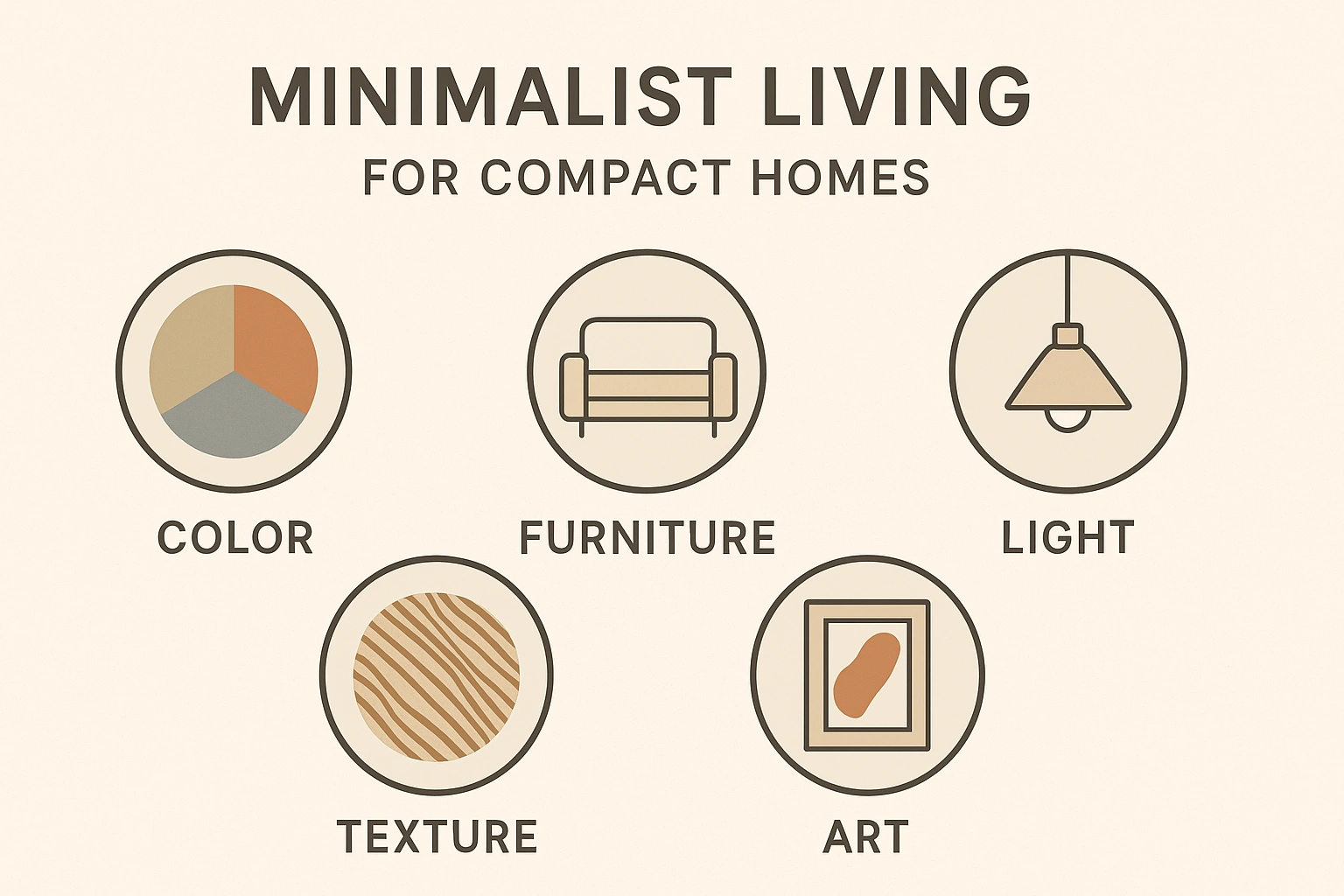
Achieving a minimalist aesthetic comes down to five key elements.
1. A Neutral Color Palette
Start with a base of whites, creams, beiges, or light grays. This creates a bright, airy foundation. Add depth with subtle earth tones like terracotta, sage green, or soft blues. A great rule to follow is the 60-30-10 rule: 60% of the room should be a dominant neutral color (walls), 30% a secondary color (furniture), and 10% an accent color (decor).
2. Functional, Low-Profile Furniture
Choose furniture with clean lines and a simple silhouette. A sofa with low arms and sleek legs, for example, looks less bulky than a traditional overstuffed couch. Every piece should be functional and comfortable. Look for pieces with built-in storage to keep clutter hidden.
3. An Emphasis on Natural Light
Maximize the natural light in your room. Use sheer or light-colored curtains, or even leave windows bare if privacy allows. A well-lit space naturally feels larger and more inviting. Keep window sills clear of clutter to allow as much light as possible to enter.
4. The Use of Texture
To prevent a neutral space from feeling cold or boring, layer in different textures. Think a chunky wool throw, a soft linen pillow, a smooth wooden coffee table, and a jute rug. This adds warmth and visual interest without adding visual clutter.
5. Intentional, High-Impact Decor
Minimalism doesn’t mean no decor. It means choosing a few special items that you truly love. A single large piece of abstract art, a beautiful ceramic vase, or a healthy green plant can make a powerful statement. The key is to avoid a collection of small, disconnected trinkets.
The Psychology of a Minimalist Space
The appeal of minimalism goes deeper than just aesthetics. It has a tangible impact on our mental state.
Reducing Cognitive Load
Every object in our field of vision competes for our attention. A cluttered room bombards our brain with stimuli, increasing our cognitive load and making it harder to focus. A minimalist space reduces this load, freeing up mental resources for more important tasks.
Combating Decision Fatigue
From choosing what to wear to deciding what to eat, we make thousands of small decisions every day. A minimalist home simplifies many of these choices. With fewer possessions, there is less to manage, organize, and worry about, which helps to combat decision fatigue.
A Real-Life Minimalist Makeover
My living room used to be a minimalist living room collection of mismatched furniture and impulse-buy decor. It felt cluttered and chaotic. I decided to do a full minimalist makeover. I sold or donated about 60% of what was in the room. I painted the walls a soft white, bought a simple sofa, and invested in one beautiful, large piece of art.
| Pros of the Makeover | Cons of the Makeover |
|---|---|
| ✅ The room feels incredibly peaceful and is a joy to be in. | ❌ It was hard to part with some items, even if I didn’t need them. |
| ✅ Cleaning takes less than 10 minutes. | ❌ High-quality minimalist furniture can be an investment. |
| ✅ I get so many compliments on how stylish and calm it looks. | ❌ It requires ongoing discipline to keep it clutter-free. |
Comparing Minimalist Furniture Styles
Minimalism isn’t one-size-fits-all. Here are a few popular styles to consider.
| Style | Key Characteristics | Materials | Best For |
|---|---|---|---|
| Scandinavian | Cozy (hygge), functional, light | Light woods, wool, linen | Creating a warm and inviting minimalist space. |
| Japanese | Zen, natural, low to the ground | Bamboo, rice paper, stone | A serene, meditative, and nature-inspired feel. |
| Industrial | Raw, edgy, open-concept | Metal, exposed brick, concrete | Lofts and modern apartments with an urban vibe. |
| Mid-Century Modern | Organic shapes, simple forms, functionality | Teak, walnut, plastic, metal | A retro yet timeless minimalist look. |
Common Minimalist Design Mistakes to Avoid
- Making it Too Cold and Sterile: Remember to add texture and natural elements to keep the space from feeling like a hospital room.
- Ignoring Storage: Minimalism requires excellent, hidden storage. If you don’t have a place for your essential items, your space will always look cluttered.
- Choosing Style Over Comfort: Your living room should still be comfortable. Don’t buy a sleek but unbearable sofa. Find pieces that are both beautiful and functional.
- Being Too Rigid: Your home should reflect your personality. It’s okay to have a few cherished items on display. The goal is intentionality, not emptiness.
- Forgetting About Scale: Make sure your furniture is the right size for your room. A tiny sofa in a large room or a huge sectional in a small room will look awkward.
- Ignoring Negative Space: Don’t feel the need to fill every wall and corner. Empty space is a crucial design element in minimalism.
Expert Tips & Best Practices
We asked interior minimalist living room designer and author of “The Simple Space,” Kenji Tanaka, for his top tip.
“The secret to successful minimalist design is negative space. Don’t be afraid of empty walls or open floor areas. This ‘breathing room’ is what makes the pieces you do have stand out. It’s the quiet that allows the music to be heard.”
- Invest in Quality, Not Quantity: It’s better to have one beautiful, well-made sofa than a room full of cheap, disposable furniture.
- Hide Your Tech: Use a media console with doors to hide cables, game consoles, and other electronics.
- Use Multi-Functional Furniture: A storage ottoman is a minimalist’s best friend.
- Bring Nature In: A few well-placed plants can add life, color, and texture to a minimalist space without adding clutter.
Frequently Asked Questions (FAQ)
Q: What is the main principle of minimalist interior design?
A: The main principle is ‘less is more.’ It involves stripping away non-essential elements and focusing on clean lines, a neutral color palette, and high-quality, functional pieces. The goal is to create a calm, uncluttered, and intentional space.
Q: How do I make a minimalist living room feel cozy and not cold?
A: Incorporate a variety of textures. Use soft materials like wool, linen, and velvet in your throws, pillows, and rugs. Add natural elements like wood and plants. Good lighting, especially warm, layered light, is also crucial for creating a cozy atmosphere.
Q: What colors are best for a minimalist living room?
A: A neutral color palette is the foundation of minimalist design. Think whites, creams, beiges, grays, and soft earth tones. This creates a serene backdrop. You can add small pops of color through art or a single piece of decor for visual interest.
Q: Can I have art and decor in a minimalist living room?
A: Absolutely. Minimalism isn’t about having empty walls. It’s about choosing a few high-impact, meaningful pieces rather than a collection of small, cluttered items. A single large piece of art often works better than a gallery wall in a small, minimalist space.
Q: How do I hide clutter like TV cables and remotes?
A: Choose a media console with closed storage. Use cable management boxes or sleeves to bundle and hide wires. Look for smart coffee tables with hidden compartments for remotes and other small items.
Conclusion
Creating a minimalist living room in a compact home is one of the most rewarding design challenges you can undertake. Using minimalist living room ideas helps you be intentional, creative, and mindful of what truly matters. Thoughtful minimalist living room choices can turn your space into a stylish and functional sanctuary, while simple minimalist living room strategies make every corner feel open and inviting. By embracing minimalist living room principles, you can enjoy the beauty of simplicity and watch your small space transform.