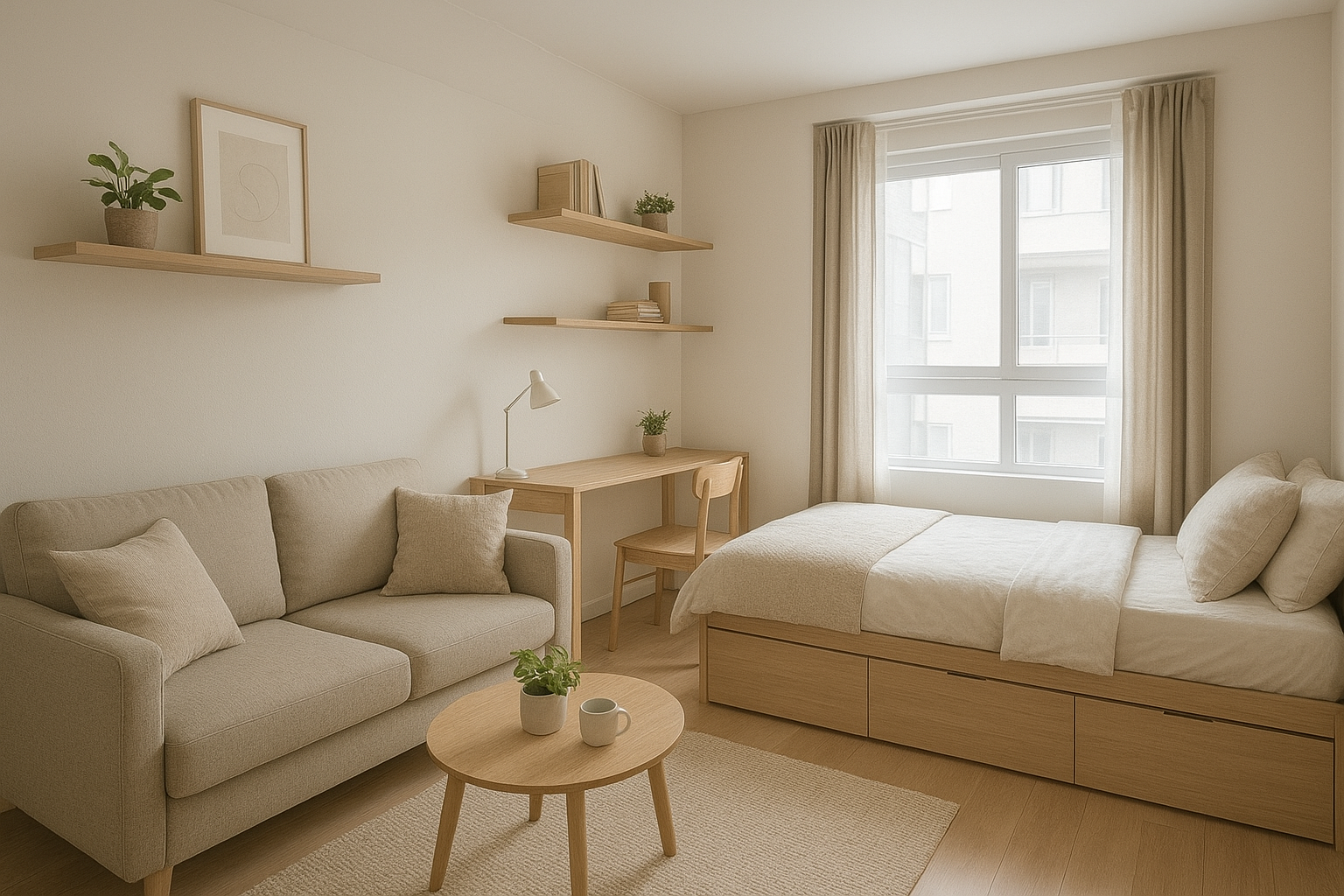
Do you ever feel like your walls are closing in? In an era of rising housing costs and a growing desire for simpler living, more people are embracing smaller homes, apartments, and studios. But living in a compact space doesn’t have to mean compromise. This guide offers practical compact living tips that go beyond basic organization, showing how to make every inch count. By following these compact living tips, you can transform your home into a stylish, functional, and serene sanctuary. With clear compact living tips for decluttering and organizing, you’ll learn to truly enjoy and love the space you’re in.
What is the Compact Living Movement?
Compact living is more than just having less square footage; it’s a conscious lifestyle choice. It’s about prioritizing experiences over possessions and efficiency over excess. This movement embraces minimalism, sustainability, and intelligent design to create homes that are easier to manage, cheaper to maintain, and better for the planet. A report from Statista highlights the global trend of urbanization, with more people moving into cities where space is at a premium. This has accelerated the need for a smarter, more intentional approach to how we live.
Adopting a space-saving lifestyle means using compact living tips to ensure every item in your home has a purpose and a place. Following compact living tips helps you curate your environment to support your life, rather than letting possessions dictate your space. By embracing smart compact living tips, you focus on quality over quantity in every aspect of your home. With these compact living tips, you can create a home that feels intentional, open, and truly livable.
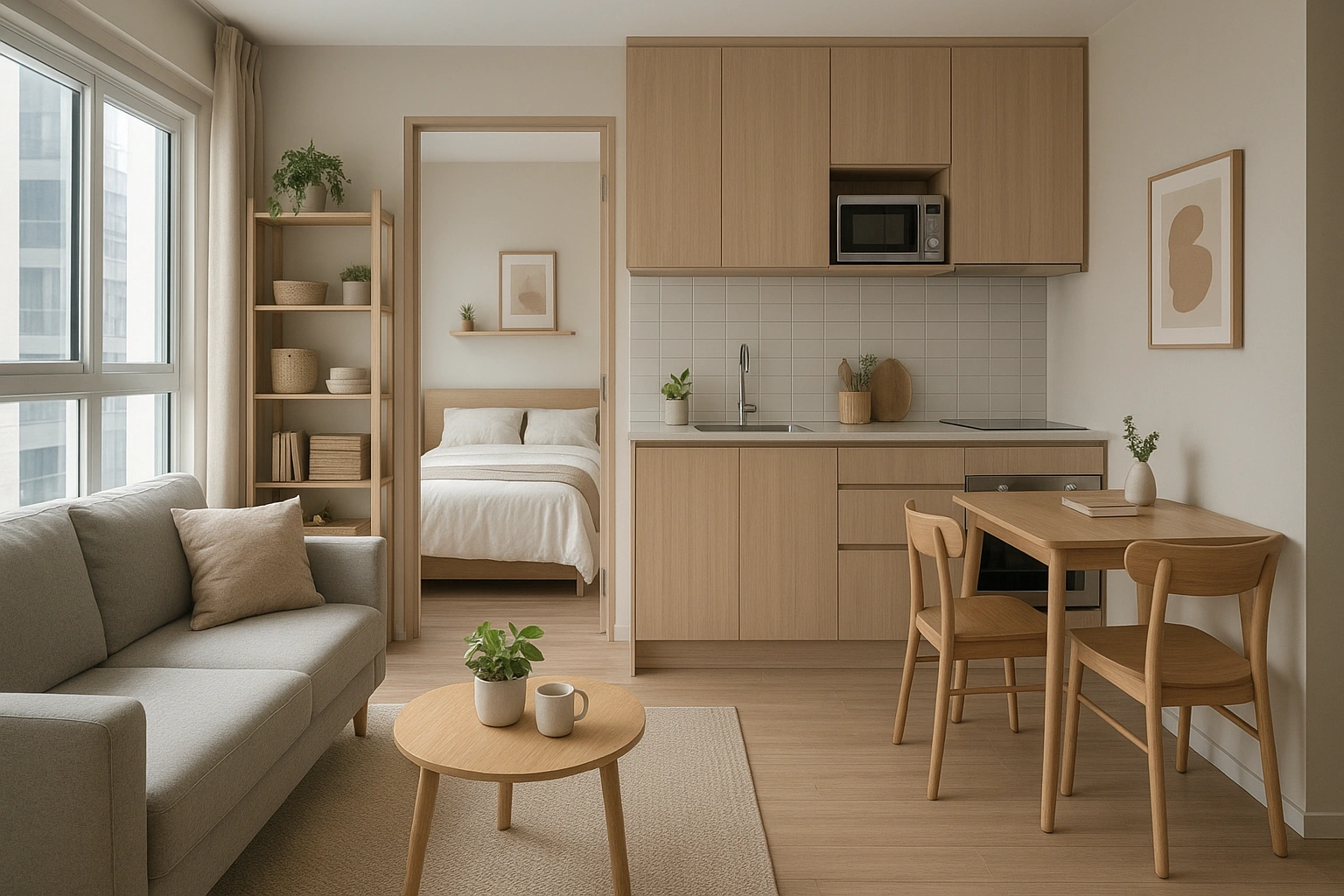
The Life-Changing Benefits of a Space-Saving Lifestyle
Embracing compact living offers profound benefits that extend far beyond a tidy home. By applying compact living tips, you can create a space that feels open and stress-free. Smart compact living tips help you organize efficiently while keeping your home functional and inviting. With consistent use of compact living tips, you can enjoy a lifestyle that values simplicity, intention, and comfort.
Financial Freedom and Flexibility
A smaller space often means lower rent or mortgage payments, reduced utility bills, and less money spent on furniture and decor. This financial freedom can be redirected toward travel, savings, or pursuing passions. Imagine saving an extra $500 a month on housing and utilities—that’s $6,000 a year you can invest in your future or your happiness.
Reduced Environmental Impact
Living smaller is inherently more sustainable. It requires fewer resources to build and maintain, consumes less energy, and encourages a more conscious approach to consumption. You naturally buy less because you have less space to store things. This leads to less waste and a smaller carbon footprint.
Enhanced Mental Well-being
As we’ve explored in our other guides, a clean, organized environment has a powerful effect on your mental state. A clutter-free home can lead to:
- Lower stress and anxiety levels.
- Improved focus and productivity.
- More time and energy for hobbies and relationships.
This modern approach to living aligns with other forward-thinking trends, which you can explore in our guides on new digital economies.
The 4 Pillars of Compact Living
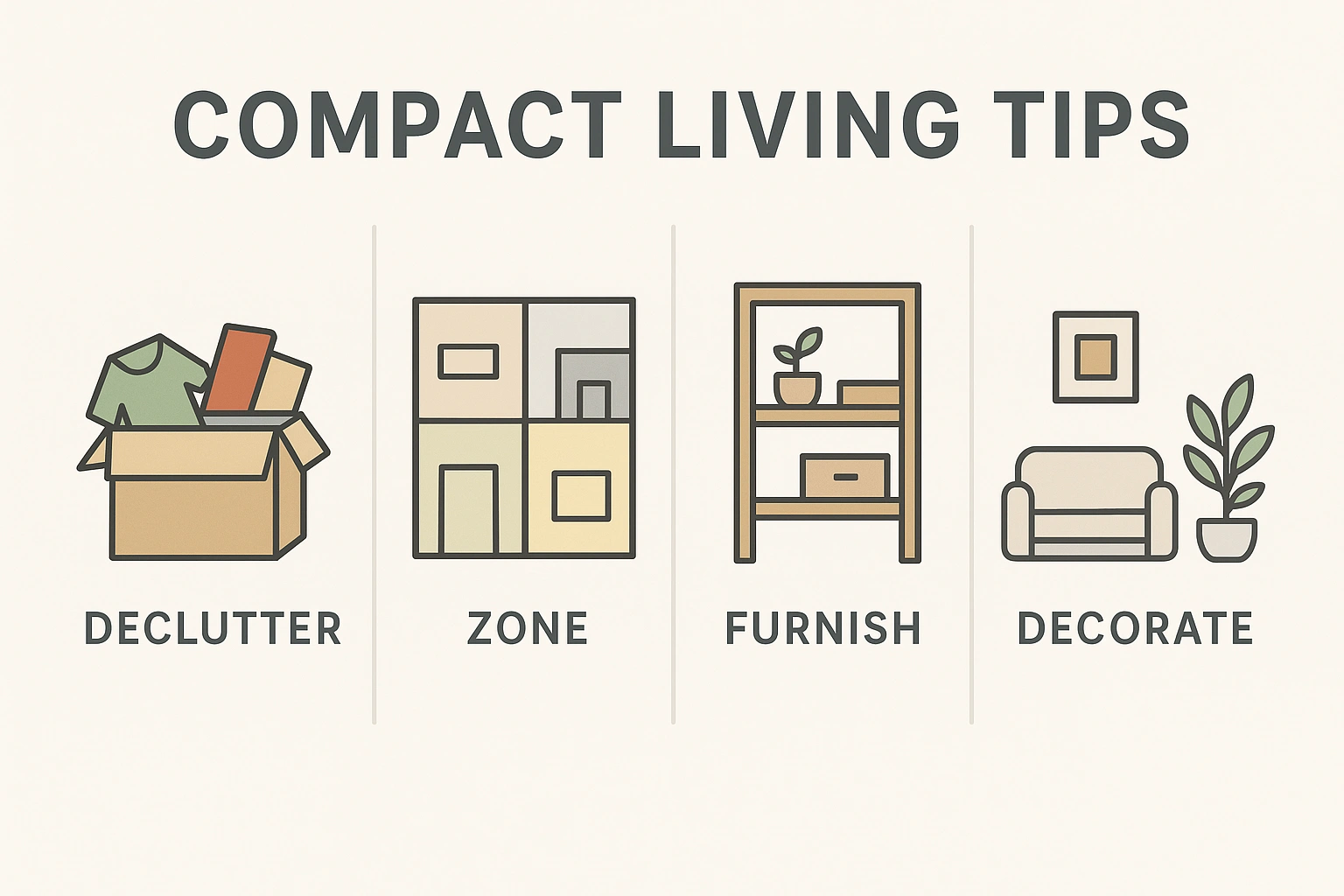
Mastering a space-saving lifestyle comes down to four key pillars, guided by practical compact living tips. By following compact living tips, you can reclaim your space step by step without feeling overwhelmed. Smart compact living tips show how to make the most of every corner while keeping your home functional. With consistent compact living tips, you can enjoy a well-organized, comfortable space that supports your daily life.
Pillar 1: The Great Declutter
This is the non-negotiable first step. You cannot organize clutter. Go through your belongings room by room and sort them into four boxes: Keep, Donate, Trash, and Relocate. Be ruthless. If you haven’t used it in a year, don’t love it, or don’t need it, let it go. Ask yourself: “Would I buy this today?” If the answer is no, it’s time for it to go.
Pillar 2: Create Functional Zones
In a small space, rooms often have to serve multiple purposes. Define distinct zones for different activities. Use area rugs to visually separate a living area from a dining area. A well-placed bookcase can create a cozy reading nook that feels separate from your main living space. Even a change in wall color or a strategically placed floor lamp can signal a shift from a ‘work zone’ to a ‘relaxation zone’.
Pillar 3: Furnish with Intention
Choose furniture that is proportional to your space and, whenever possible, multi-functional. Look for pieces with clean lines and raised legs, which create a sense of openness by showing more of the floor. Consider materials like glass or acrylic for tables, as their transparency makes them seem less bulky.
Pillar 4: Decorate for Depth
Use design tricks to make your space feel larger. Hang mirrors to reflect light and create an illusion of depth. Use a light, neutral color palette on the walls. Hang curtains higher and wider than the window frame to make the window appear bigger. Vertical stripes on a single wall can also draw the eye upward and make ceilings feel higher.
DIY Space-Saving Projects on a Budget
You don’t need to be a master carpenter to create effective storage. Here are a few simple DIY projects that can make a huge difference.
DIY Floating Bookshelves
Create a stunning and space-saving display for your books. All you need are a few sturdy wall brackets and planks of wood cut to your desired length. This gets books off the floor and turns them into a design feature.
DIY Under-Bed Storage Drawers
Buy a few shallow wooden crates from a craft store, attach small caster wheels to the bottom, and you have instant rolling drawers that slide perfectly under your bed. They’re perfect for storing shoes, extra linens, or seasonal clothing.
DIY Magnetic Spice Rack
Free up valuable cabinet space by creating a magnetic spice rack on the side of your refrigerator. Simply buy small tins, fill them with your favorite spices, and glue strong magnets to the back. It’s functional, affordable, and looks great.
A Real-Life Transformation: My Studio Apartment
When I first moved into my 400-square-foot studio, I brought everything from my old, larger apartment. It was chaotic. I felt cramped and stressed. After embracing these compact living tips, the transformation was incredible. I sold my bulky sofa and replaced it with a sleek loveseat with hidden storage. I mounted my desk to the wall, and it now folds away when I’m not working. The biggest change, however, was my mindset. I stopped buying things ‘just in case’ and started curating my life with only the essentials.
| Pros of the Transformation | Cons of the Transformation |
|---|---|
| ✅ The space feels twice as large and is much easier to clean. | ❌ I had to let go of some furniture I liked but wasn’t practical. |
| ✅ I saved money by selling old items and buying less. | ❌ It took a full weekend to do the initial declutter. |
| ✅ I feel calmer and more in control of my environment. | ❌ Having guests over requires more planning. |
Comparing Space-Saving Furniture Staples
Here are some of the hardest-working pieces for a compact home.
| Furniture Type | Primary Function | Space-Saving Feature | Best For |
|---|---|---|---|
| Convertible Sofa Bed | Seating | Transforms into a bed | Studio apartments or homes without a guest room. |
| Expandable Dining Table | Dining | Has leaves to extend for guests | Those who love to entertain but have a small dining area. |
| Leaning Ladder Shelf | Storage/Display | Small footprint, uses vertical space | Bathrooms, living rooms, or any narrow wall space. |
| Nesting Coffee Tables | Surface Area | Multiple tables tuck into one small footprint | Living rooms where flexible surface space is needed. |
Common Compact Living Mistakes to Avoid
- Shrinking Everything: Don’t just buy miniature versions of standard furniture. Sometimes one larger, well-chosen piece looks better than several small, cluttered ones.
- Forgetting About Lighting: A poorly lit room will always feel small and cramped. Layer your lighting with overhead, task, and accent lights.
- Blocking Natural Light: Avoid heavy, dark curtains. Opt for sheer or light-colored blinds that let in as much daylight as possible.
- Creating “Dead” Corners: Use corner shelves or a well-placed plant to make every corner of your room functional.
- Being Afraid of Color: While a neutral base is a good idea, don’t be afraid to add pops of color through pillows, art, or a single accent wall to give the space personality.
Expert Tips & Best Practices
We asked professional organizer and author of “The Tidy Mind,” Sarah Thompson, for her advice.
“The most impactful change you can make is to give every single item a designated ‘home.’ When everything has a place to return to, tidying up takes minutes, not hours. This single habit is the foundation of a sustainable space-saving lifestyle.”
- Go Digital: Scan important documents, photos, and manuals to reduce paper clutter.
- Choose a Cohesive Color Palette: A limited color scheme creates a sense of calm and makes a space feel larger.
- Use Rugs to Define Spaces: An area rug can create the illusion of a separate room within an open-plan space.
- Think Seasonally: Store out-of-season clothes and decor in vacuum-sealed bags under your bed or in a high-up, hard-to-reach spot.
Frequently Asked Questions (FAQ)
Q: What is the golden rule of compact living?
A: The golden rule is to declutter first. Before you buy any furniture or organizers, you must reduce your possessions to what is essential and loved. A space-saving lifestyle is more about mindset than about products.
Q: How can I make my small apartment look bigger?
A: Use light colors on the walls, incorporate mirrors to reflect light and create an illusion of depth, choose furniture with raised legs to show more floor space, and ensure you have good lighting, both natural and artificial.
Q: Is a space-saving lifestyle expensive to adopt?
A: Not at all. In fact, it’s often cheaper. It encourages you to buy less and be more intentional with your purchases. Many of the best compact living tips involve clever organization and DIY solutions rather than expensive furniture.
Q: What are the best types of furniture for small spaces?
A: Multi-functional furniture is key. Look for items like storage ottomans, lift-top coffee tables, wall-mounted desks that fold away, and bed frames with built-in drawers. These pieces serve multiple purposes, saving you both space and money.
Q: How do I handle sentimental items I don’t have space for?
A: This is a common challenge. Consider digitizing photos and documents. For physical items, you can create a small, dedicated ‘memory box.’ Another great option is to take a high-quality photo of the item and create a photo album, allowing you to keep the memory without the physical clutter.
Conclusion
Adopting these compact living tips is about more than just organizing your home; it’s about designing a life with more intention, freedom, and peace. Using smart compact living tips like decluttering, choosing multi-functional pieces, and applying clever design tricks helps your home feel open and supportive. Following simple compact living tips can make even a small space feel spacious, while embracing other compact living tips encourages a lifestyle that values function and joy. With these compact living tips, you can discover the true pleasure of living better with less.