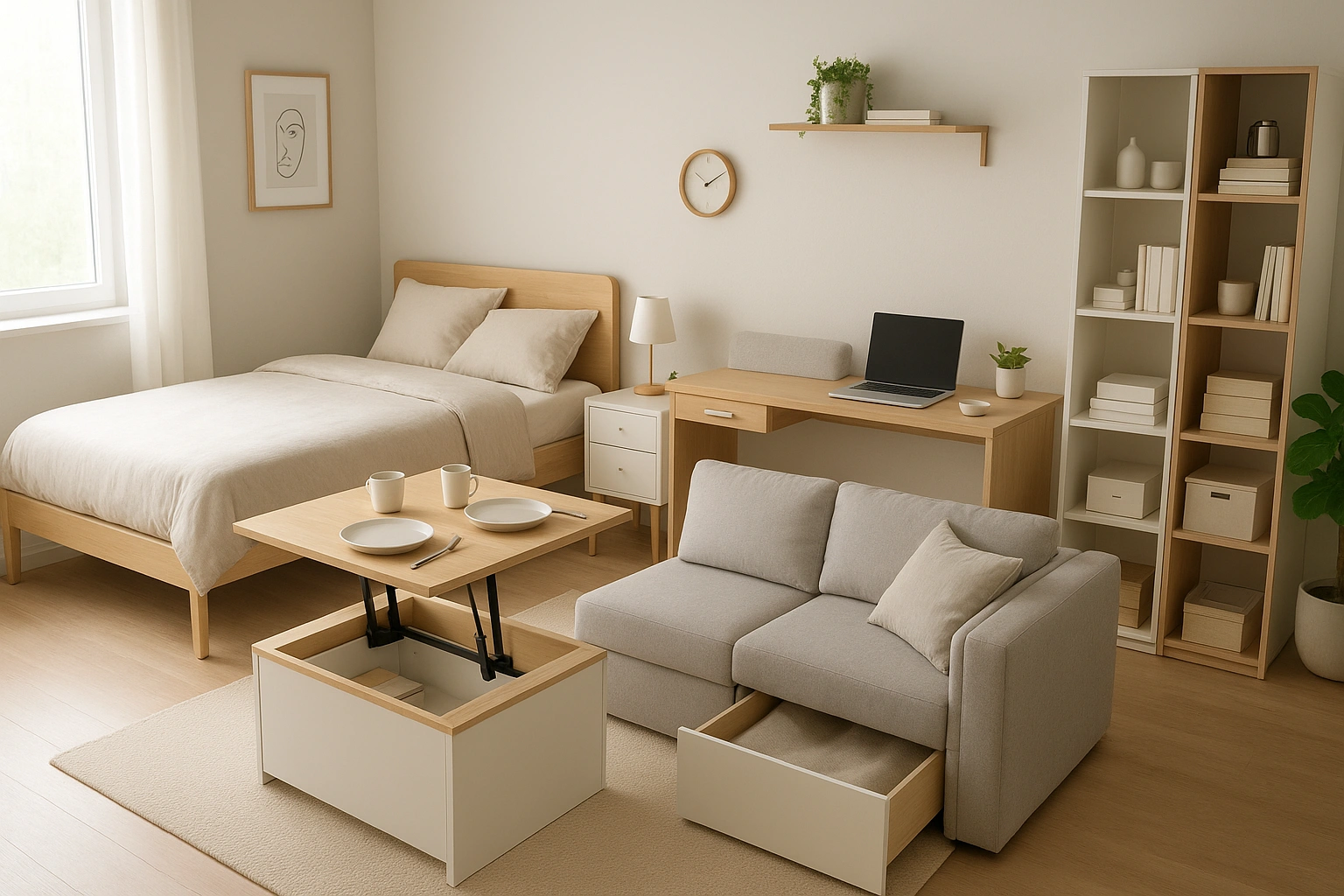
What is Multifunctional Furniture?
Multifunctional furniture, often called dual-purpose furniture, refers to pieces that are intelligently designed to serve two or more distinct functions. It’s about embedding multiple uses into a single, cohesive design. This goes beyond simple storage; it’s about true transformation. A classic example is the sofa bed, but modern designs are far more ambitious, combining desks with beds, dining tables with coffee tables, and shelving with seating.
The rise of this design category is directly linked to the global trend of urbanization and the shrinking size of the average home. As noted by major news outlets like Google News, more people are living in smaller spaces than ever before. This has created a massive demand for furniture that is not just compact, but also clever. As a result, designers and engineers are creating incredible solutions that were once the stuff of science fiction.
Why Multifunctional Designs are a Necessity, Not a Luxury
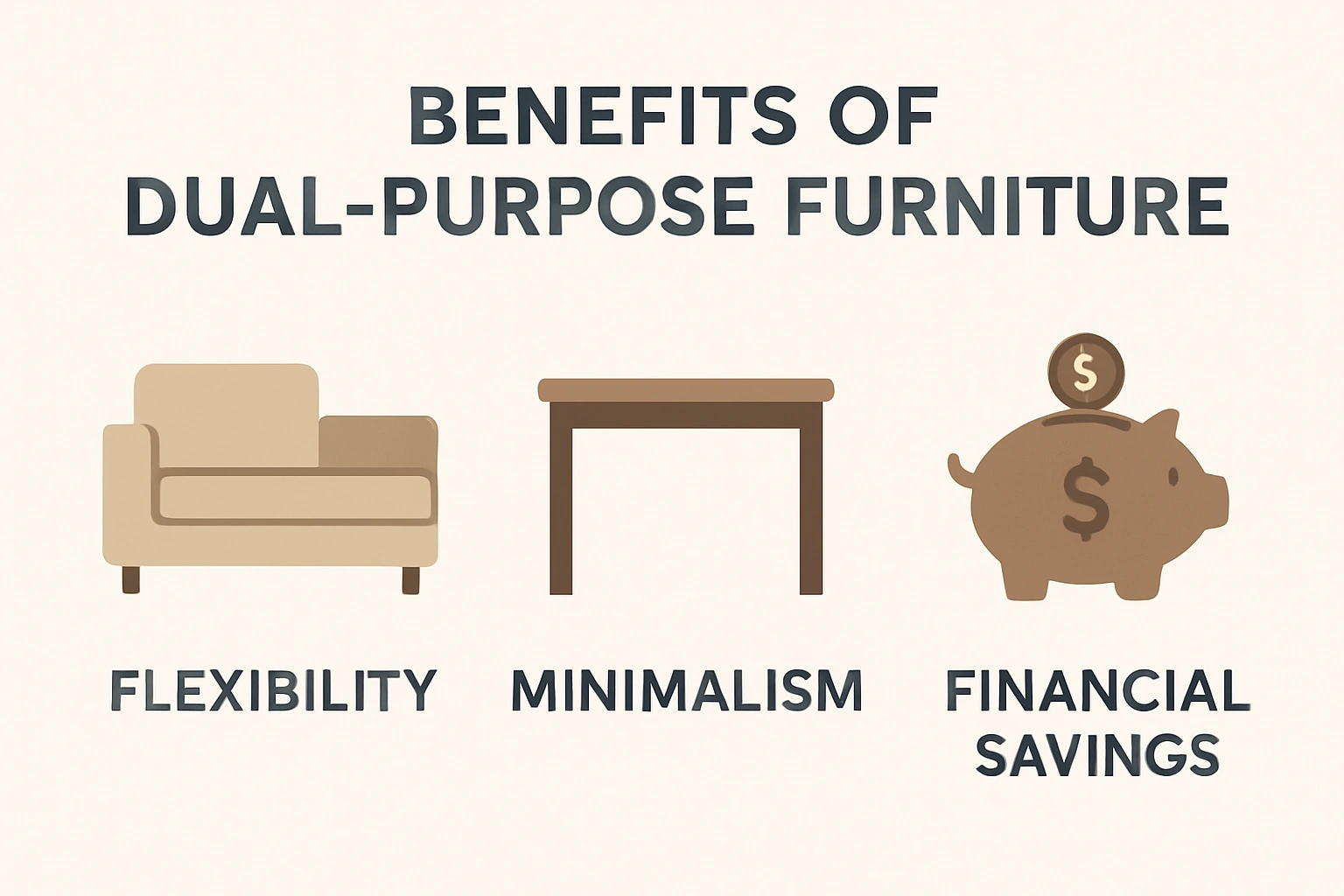
Investing in dual-purpose furniture is one of the most powerful strategies for optimizing a small home. The benefits are profound and go far beyond simply saving space.
It Creates a Hyper-Flexible Living Space
Your home needs to adapt to your life. A multifunctional piece allows a single room to change its identity throughout the day. Your living room can be a productive home office from 9 to 5, a comfortable lounge in the evening, and a welcoming guest room on the weekend. This level of flexibility is the key to comfortable, stress-free living in a compact environment.
It Promotes a Minimalist, Clutter-Free Lifestyle
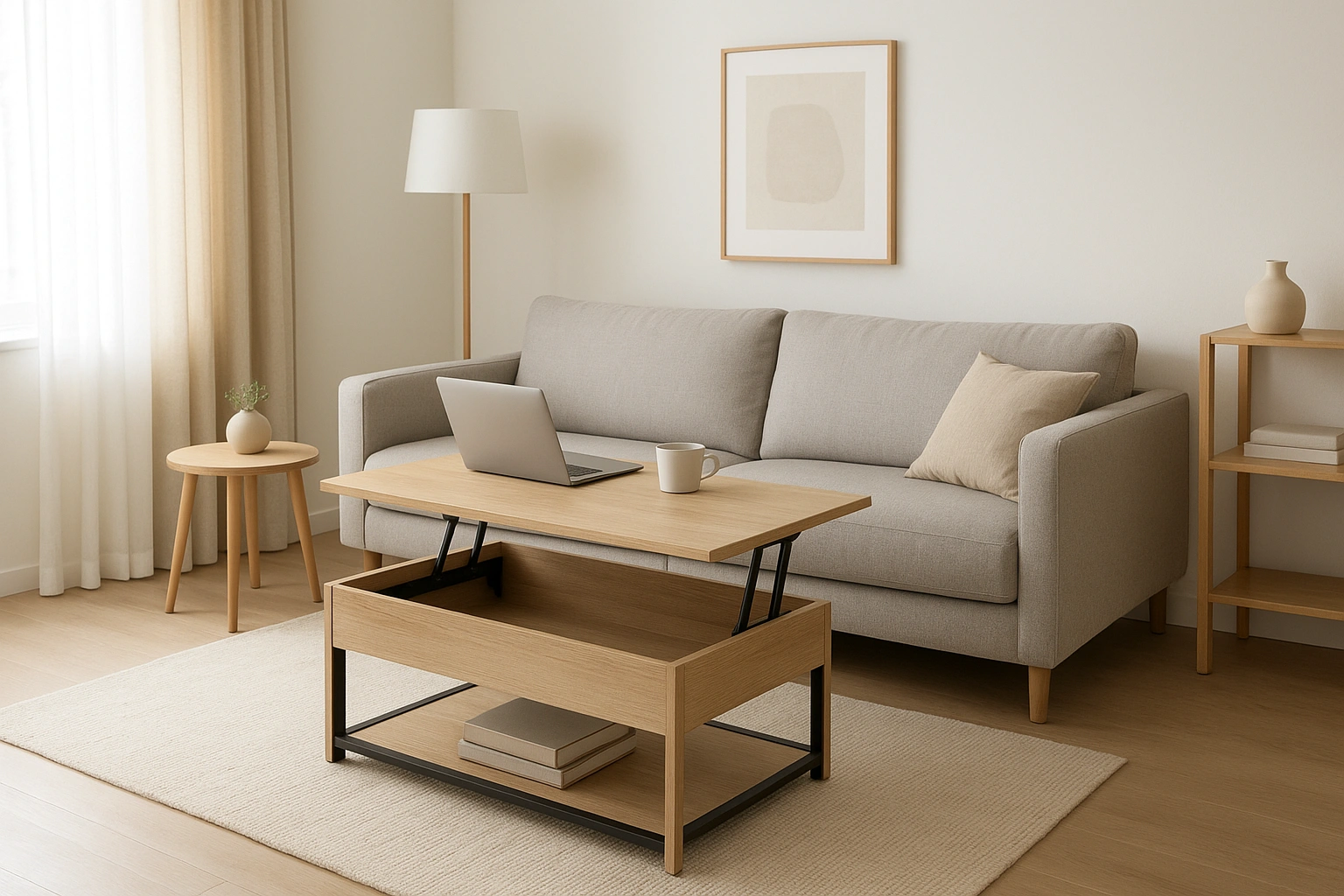
By having one piece of furniture do the job of two or three, you naturally reduce the total number of items in your home. This leads to less clutter, more open space, and a more serene and organized environment. A lift-top coffee table, for example, eliminates the need for a separate desk, freeing up both physical and visual space.
It’s a Smart Financial Investment
While the upfront cost of a high-quality multifunctional piece can be higher than a standard item, it’s often cheaper than buying two or three separate pieces of furniture. A Murphy bed with an integrated sofa costs less than buying a separate bed and a separate sofa of comparable quality. For more on making smart financial decisions, check out our resources at bitcoinnews.biz.id.
How It Works: The Core Principles of Transforming Design
Great multifunctional design is built on a few key principles. Understanding these will help you identify well-designed pieces.
- Mechanical Transformation: This involves a physical change in the furniture’s shape or height. Examples include the lifting mechanism of a coffee table, the folding action of a Murphy bed, or the sliding tracks of an expandable console table. The quality of the hardware is everything.
- Integrated Utility: This is about embedding a secondary function into a primary form. Think of a sofa with a built-in bookshelf in the armrest, a bed frame with integrated drawers, or an ottoman with a hollow interior for storage.
- Modularity and Adaptability: This refers to furniture made of separate components that can be rearranged. A modular sectional sofa can be reconfigured from a left-chaise to a right-chaise, or even broken up into separate seating elements.
Real-Life Review: The Sofa with Integrated Storage Chaise
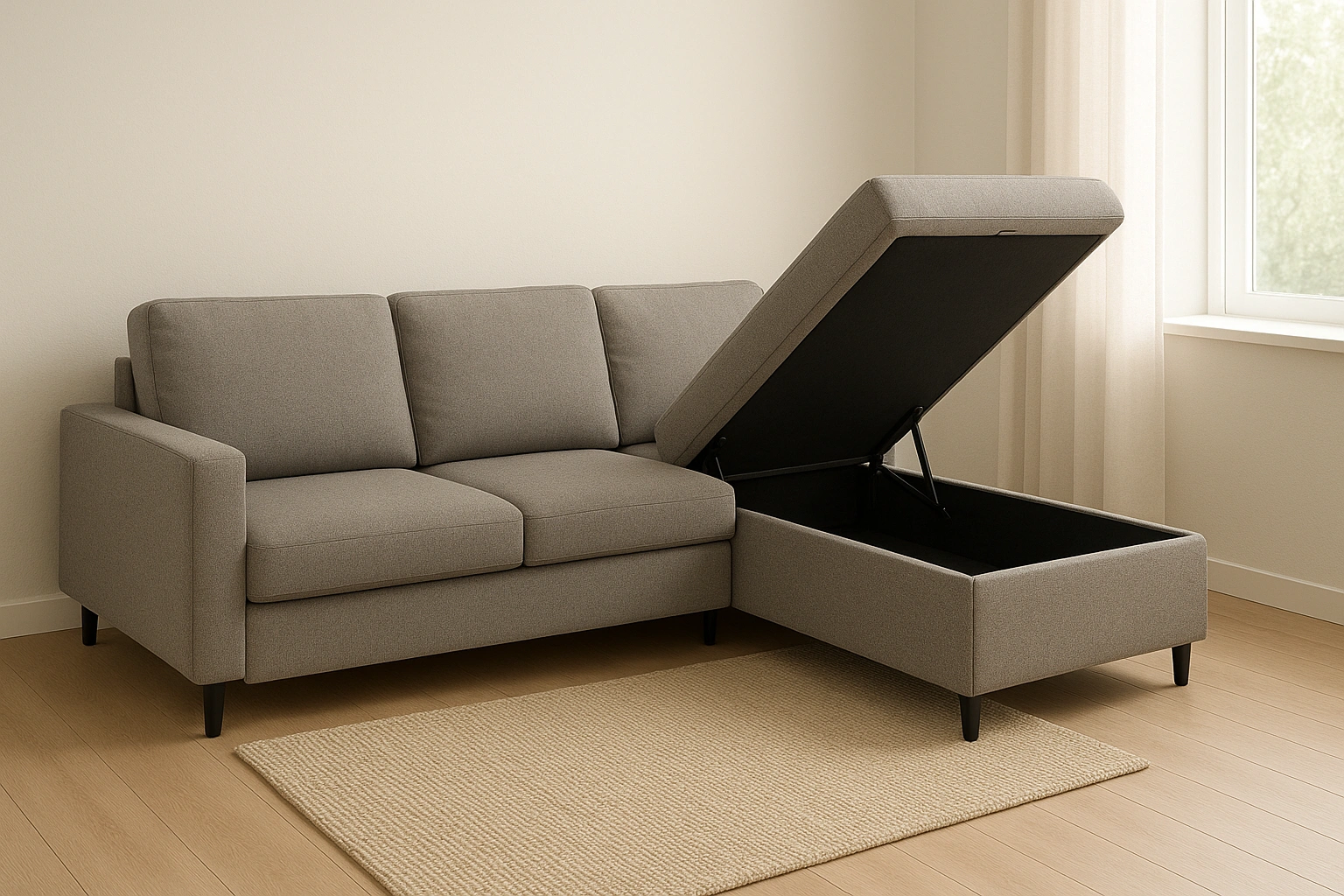
My apartment has virtually no closet space, and finding a home for extra blankets, pillows, and board games was a constant struggle. I chose a sectional sofa with a storage chaise. The chaise cushion is on a hydraulic hinge, and it lifts up with almost no effort to reveal a massive hidden compartment. It’s like having a secret trunk in my living room. As a sofa, it’s incredibly comfortable, but its hidden superpower is what makes it indispensable. It has allowed me to completely declutter my living space, and no one would ever guess that my entire linen collection is stored inside it.
| Pros | Cons |
|---|---|
| ✅ Provides a huge amount of invisible storage | ❌ Can be more expensive than a standard sofa |
| ✅ The hydraulic lift is easy and safe to operate | ❌ You have to move cushions to access the storage |
| ✅ Reduces the need for other bulky storage furniture |
Comparison: Top 4 Multifunctional Furniture Designs
Here’s a look at some of the most popular and effective categories of transforming furniture.
| Design | Primary / Secondary Function | Pros | Cons | Best For |
|---|---|---|---|---|
| Lift-Top Coffee Table | Coffee Table / Dining or Work Desk | Creates a functional workspace, often has storage. | Mechanism quality is crucial; can be heavy. | People who work from home in a studio or 1-bed. |
| Murphy Bed with Desk | Bed / Full-Sized Desk | The ultimate space-doubler, desk can stay set up. | Requires professional installation, high cost. | Turning a guest room into a full-time home office. |
| Storage Bed | Bed / Dresser | Massive, hidden storage in drawers or via a lift-up frame. | Can be heavy and difficult to move. | Bedrooms with small or non-existent closets. |
| Expandable Console | Console Table / Full Dining Table | Minimal footprint, massive expansion capability. | Requires storage for leaves, premium price. | Small homes that need to host large gatherings. |
Common Mistakes to Avoid
- Prioritizing the Gimmick Over the Primary Function: A desk that turns into a bed is useless if it’s a terrible desk and an uncomfortable bed. The piece must excel at its primary function first and foremost. A sofa bed should be a great sofa.
- Ignoring the Transformation Effort: If a piece is difficult, heavy, or complicated to convert, you will eventually stop using its secondary function. Look for smooth, easy-to-operate mechanisms.
- Misjudging the Scale: You need to consider the size of the furniture in *all* of its forms. An expandable table might fit perfectly when closed, but completely overwhelm the room when open. Measure for every configuration.
- Skimping on Mechanism Quality: This is the most critical component. A cheap, flimsy lift or hinge will not last. It is better to invest in a simpler piece with high-quality hardware than a complex piece with cheap parts.
Expert Tips & Best Practices
“The most successful multifunctional designs are the ones that don’t scream ‘I’m multifunctional!’ The mechanisms should be so well-integrated and the design so seamless that it looks like a beautiful, high-end piece of single-purpose furniture. The transformation should be a delightful surprise, not an obvious compromise.”
– Elena Vasquez, Furniture Designer
- Look for Soft-Close Features: High-quality pieces often have soft-close drawers and mechanisms, which prevent slamming and add a touch of luxury and safety.
- Consider the “In-Between” State: If you have a lift-top coffee table, can you still access the storage when the top is partially lifted? Think through all the ways you’ll use it.
- Read the Warranty: A long warranty on the frame and especially on the transforming mechanism is a strong indicator of the manufacturer’s confidence in their product’s durability.
- Watch Video Reviews: This is the best way to see a mechanism in action. You can gauge how smooth and easy the transformation really is before you buy.
Frequently Asked Questions (FAQ)
Q: Is multifunctional furniture difficult to operate?
A: While early designs could be clunky, modern multifunctional furniture is engineered for ease of use. High-quality pieces feature smooth-gliding mechanisms, hydraulic pistons, or counter-balanced systems that make transformation almost effortless. Always test a mechanism in-store if possible, or watch video reviews to see it in action.
Q: Does dual-purpose furniture mean I have to compromise on style?
A: Not anymore. In 2025, designers are creating multifunctional pieces that are stylish first and functional second. You can find transforming furniture in every aesthetic, from sleek and minimalist to rustic and industrial. The mechanisms are often cleverly hidden, so the piece looks like a high-end, single-purpose item.
Q: What is the most important feature to look for in a multifunctional piece?
A: The quality of the mechanism is paramount. A clever design is useless if the hinges, sliders, or lift systems are flimsy and break after a few months. Prioritize pieces from reputable brands with good warranties and solid user reviews that specifically mention the durability of the transforming parts.
Conclusion: The Future of Furniture is Flexible